Tuesday, October 30, 2018

An Inheritance-Based Lexical Approach to Sentiment Analysis [Problem Statement]


.

1.4 Challenges

Sentiment analysis is a popular research area, and there have been over 7000 research projects and articles written on the topic. Nevertheless, there are still many major challenges, some of which have been identified at previous years’ Sentiment Analysis Symposium, an annual conference that addresses the business value of sentiment, opinion, emotion and intent, including:

1. There is a lack of suitable modelling of compositional sentiment, which means that the overall sentence sentiment of the sentiment bearing word, the sentiment shifters and the sentence structure need to be calculated more accurately at the sentence level.

2. Sentiment lexicons are one of the important features used in sentiment analysis. Creating a sentiment lexicon is another challenging task. Building a lexicon with semantic intensity scores is extremely beneficial. However, having such scores annotated by human annotators is not feasible as it is difficult to maintain consistency across different annotators. Various lexicon sources are publicly available for sentiment analysis. However, which sources give the most reliable semantic scores has not yet been established.

3. In the same document, a product may be referred to by many names. This is one of the main issues of automatic name entity resolution, and has not yet been solved effectively. The handling of anaphora resolution in an accurate way is another major issue in text mining. It is an important, challenging issue in sentiment analysis too.

4. It is essential to identify the text relevant to each entity, when there are several entities discussed in a document. The current accuracy of the identification of relevant text does not give satisfying results.

5. Another big challenge in sentiment analysis system is handling noisy text (text with spelling/grammatical mistakes, missing/problematic punctuation, slang, etc.).

6. Handling sarcasm and irony is another challenge in sentiment analysis. Some reviews tend to show their dissatisfaction towards a product/service in a sarcastic way using positive language. Identifying sarcasm has not yet been properly integrated within sentiment analysis systems, although some previous researchers (e.g. (Riloff et al., 2013)) have worked on recognition of sarcasm in the field.

7. A new approach is needed to handle factual statements. Many statements about factual entities carry sentiment. But only subjective statements are considered in most of the current sentiment analysis methods, and researchers fail to consider such factual (objective) statements.

8. Some authors like to use ambiguous comments in their posts. Ambiguous words and statement may be humorous but can lead to vagueness and confusion. Expressing the meaning of such statements without context is difficult.

9. In some cases, applications translate foreign customers’ reviews into English. Many translation programs have difficulty correctly interpreting sentiments in language, as Western and Asian or African sentiments differ from each other significantly

.

Tuesday, October 2, 2018

Sentiment analysis in education domain: A systematic literature review


Abstract

E-learning is the delivery of education through digital or electronic methods allowing students to acquire new knowledge and develop new skills. 

E-learning allows students to expand their knowledge whenever and wherever. 

Several authors consider sentiment analysis as an alternative to improve the learning process in an e-learning environment since it allows analyzing the opinions of the students in order to better understand their opinion and take more effective, better-targeted actions. 

In this sense, this work presents a systematic literature review about sentiment analysis in education domain. 

This review aims to detect the approaches and digital educational resources used in sentiment analysis as well as to identify what are the main benefits of using sentiment analysis on education domain. 

The results show that Naïve Bayes is the most used technique for sentiment analysis and that forums of MOOCs and social networks are the most used digital education resources to collect data needed to perform the sentiment analysis process. 

Finally, some of the main benefits of using sentiment analysis in education domain are the improvement of the teaching-learning process and students’ performance, as well as the reduction in course abandonment.

REFERENCES

1. Vinodhini, G., Chandrasekaran, R.: Sentiment analysis and opinion mining: a survey. Int.

J. Adv. Res. Comput. Sci. Softw. Eng. 2, 282–292 (2012)


2. Salas-zárate, M.P., Medina-moreira, J., Lagos-ortiz, K., Luna-aveiga, H., Rodríguez-garcía,

M.Á., Valencia-garcía, R.: Sentiment analysis on tweets about diabetes: an aspect-level

approach. Hindawi Comput. Math. Methods Med. 2017, 9 (2017)


3. Luna-Aveiga, H., et al.: Sentiment polarity detection in social networks: an approach for

asthma disease management. In: Le, N.-T., Van Do, T., Nguyen, N.T., Thi, H.A.L. (eds.)

ICCSAMA 2017. AISC, vol. 629, pp. 141–152. Springer, Cham (2018). https://doi.org/10.

1007/978-3-319-61911-8_13


4. Feldman, R.: Techniques and applications for sentiment analysis. Commun. ACM 56, 82

(2013)


5. Mandinach, E.B., Cline, H.F.: Classroom Dynamics: Implementing a Technology-Based

Learning Environment. Taylor & Francis, New York (2013)


6. Mayer, J.D., Salovey, P., Caruso, D.R.: Emotional intelligence: new ability or eclectic traits?

Am. Psychol. 63, 503–517 (2008)


7. Anitha, N., Anitha, B.: Sentiment classification approaches – a review. Int. J. Innov. Eng.

Technol. 3, 22–31 (2013)


8. Zhang, H.: The optimality of Naive Bayes. Am. Assoc. Artif. Intell. 19 (2004)


9. Varghese, R., Science, C.: Aspect based sentiment analysis using support vector machine

classifier. In: International Conference on Advances in Computing, Communications and

Informatics (ICACCI), pp. 1581–1586. IEEE (2013)


10. Tang, D., Qin, B., Liu, T.: Document modeling with gated recurrent neural network for

sentiment classification. In: Proceedings of the 2015 Conference on Empirical Methods in

Natural Language Processing, pp. 1422–1432 (2015)


11. Batista, F., Ribeiro, R.: Sentiment analysis and topic classification based on binary

maximum entropy classifiers. Proces. del lenguaje Nat. 50, 77–84 (2013)


12. Rice, D.R.: Corpus-based dictionaries for sentiment analysis of specialized vocabularies. In:

Annual Meeting of Midwest Political Science Association (2015)


13. Rao, Y., Lei, J., Wenyin, L., Li, Q., Chen, M.: Building emotional dictionary for sentiment

analysis of online news. World Wide Web 17, 723–742 (2014)


14. Tsai, A.C.: Building a Concept-Level Sentiment on Commonsense Knowledge, pp. 22–30.

IEEE Computer Society, Washington, D.C. (2013)


15. Kechaou, Z., Alimi, A.M.: Improving e-learning with sentiment analysis of users’ opinions.

In: IEEE Global Engineering Education Conference – Learning Environment Ecosystem for

Engineering Education, pp. 1032–1038 (2011)


16. Munezero, M., Montero, C.S., Sutinen, E., Pajunen, J.: Are they different? Affect, feeling,

emotion, sentiment, and opinion detection in text. IEEE Trans. Affect. Comput. 5, 101–111

(2014)


17. Hoffmann, P., Wilson, T., Wiebe, J.: Recognizing contextual polarity: an exploration of

features for phrase-level sentiment analysis. Comput. Linguist. 35, 399–433 (2009)


18. Romero, C., Ventura, S.: Data mining in education. Wiley Interdiscip. Rev. Data Min.

Knowl. Discov. 3, 12–27 (2013)


19. Haddi, E., Liu, X., Shi, Y.: The role of text pre-processing in sentiment analysis. Procedia

Comput. Sci. 17, 26–32 (2013)


20. Ravi, K., Ravi, V.: A Survey on Opinion Mining and Sentiment Analysis: Tasks,

Approaches and Applications. Elsevier B.V., New York City (2015)


21. Medhat, W., Hassan, A., Korashy, H.: Sentiment analysis algorithms and applications: a

survey. Ain Shams Eng. J. 5, 1093–1113 (2014)


22. Jagtap, V.S., Pawar, K.: Analysis of different approaches to sentence-level sentiment

classification. Int. J. Sci. Eng. Technol. 2, 164–170 (2013)


23. Altrabsheh, N., Cocea, M., Fallahkhair, S.: Learning sentiment from students’ feedback for

real-time interventions in classrooms. In: Bouchachia, A. (ed.) ICAIS 2014. LNCS (LNAI),

vol. 8779, pp. 40–49. Springer, Cham (2014). https://doi.org/10.1007/978-3-319-11298-5_5


24. Rana, T.A., Cheah, Y., Letchmunan, S.: Topic modeling in sentiment analysis: a systematic

review. J. ICT Res. Appl. 10, 76–93 (2016)


25. Gonçalves, P., Araújo, M., Benevenuto, F., Cha, M.: Comparing and combining sentiment

analysis methods. Comput. Appl. Soc. Behav. Sci. ACM. 27–37 (2014)


26. Aliandu, P.: Sentiment analysis on Indonesian tweet. In: Proceedings of International

Conferences of Information, Communication, Technology, and Systems, pp. 203–208

(2013)


27. Mouthami, K., Devi, K.N., Bhaskaran, V.M.: Sentiment analysis and classification based on

textual reviews. In: 2013 International Conference on Information Communication and

Embedded Systems, pp. 271–276 (2013)


28. Wöllmer, M., Weninger, F., Knaup, T., Schuller, B.: YouTube movie reviews: sentiment

analysis in an audio-visual context. IEEE Intell. Syst. 46–53 (2013)


29. Ortigosa, A., Martín, J.M., Carro, R.M.: Sentiment analysis in Facebook and its application

to e-learning. Comput. Human Behav. 31, 527–541 (2014)


30. Wen, M., Yang, D., Rosé, C.: Sentiment analysis in MOOC discussion forums: what does it

tell us? In: Proceedings of the Educational Data Mining, pp. 1–8 (2014)


31. Neves-Silva, R., Watada, J., Phillips-Wren, G.E.: Intelligent decision technologies. In:

Proceedings of the 5th KES International Conference on Intelligent Decision Technologies

(KES-IDT 2013). IOS Press (2013)


32. Munezero, M., Mozgovoy, M.: Exploiting sentiment analysis to track emotions in students’

learning diaries. Nat. Lang. Process. ACM. 145–152 (2013)


33. Wang, X., Yang, D., Wen, M., Koedinger, K., Rosé, C.P.: Investigating how student’ s

cognitive behavior in MOOC discussion forums affect learning gains. In: Proceedings of the

8th International Conference on Educational Data Mining, pp. 226–233 (2015)


34. Robinson, C., Yeomans, M., Reich, J., Gehlbach, H.: Forecasting student achievement in

MOOCs with natural language processing. In: LAK 2016, pp. 383–387. ACM (2016)


35. Tucker, C.S.: Mining student-generated textual data in MOOCS and quantifying their effects

on student performance and learning outcomes. In: Proceedings of the 121st ASEE Annual

Conference and Exposition, vol. 5 (2014)


36. Merceron, A.: Educational data mining/learning analytics: methods, tasks and current trends.

In: Proceedings of the 13th e-Learning Conference of the German Computer Society (DeLFI

2015), pp. 101–109 (2015)


37. Bowman, S.R., Potts, C., Manning, C.D.: Learning distributed word representations for

natural logic reasoning. In: Proceedings Knowledge Representation, Reasoning, Integration

Symbolic Neural Approaches Paper from 2015 of the Association for the Advancement of

Artificial Intelligence Spring Symposium (AAAI) Spring Symposium—Lea, pp. 10–13

(2015)


38. Darcy, A., Louie, A., Weiss, L.: Machine learning and the profession of medicine. Am. Med.

Assoc. Innov. Heal. CARE Deliv. 5719, 2–3 (2016)


39. Blikstein, P.: Multimodal learning analytics. In: LAK 2013, pp. 102–106. ACM (2013)


40. Troussas, C., Virvou, M., Espinosa, K.J., Llaguno, K., Caro, J.: Sentiment analysis of

Facebook statuses using Naive Bayes classifier for language learning. IEEE (2013)


41. Crossley, S., Danielle, S., Baker, R., Wang, Y., Barnes, T.: Language to completion: success

in an educational data mining massive open online class. In: Proceedings of 8th International

Conference on Educational Data Mining Society, ERIC, pp. 8–11 (2015)


42. Chen, D., Socher, R., Manning, C.D., Ng, A.Y.: Neural tensor networks and semantic word

vectors. Comput. Sci. Comput. Lang. Cornell Univ. Libr. 1–4 (2013)


43. Bowman, S.R.: Can recursive neural tensor networks learn logical reasoning? Comput. Sci.

Comput. Lang. Cornell Univ. Libr. 1–10 (2014). arXiv: 1312.6192v4 [cs. CL]. Accessed 15

Feb 2014


44. Chen, X., Member, S., Vorvoreanu, M., Madhavan, K.: Mining social media data for

understanding students’ learning experiences. IEEE Trans. Learn. Technol. 7, 246–259

(2014)


45. Peña-ayala, A.: Expert systems with applications educational data mining: a survey and a

data mining-based analysis of recent works. Expert Syst. Appl. 5G, 31 (2013)


46. Clow, D., Hall, W., Keynes, M.: MOOCs and the funnel of participation. In: Proceedings of

the 3rd International Conference on Learning Analytics and Knowledge, pp. 185–189. ACM

(2013)


https://link.springer.com/chapter/10.1007/978-3-030-00940-3_21

Friday, November 10, 2017

How To Upload Audio File To YouTube?


.

Guides for Uploading Audio to YouTube Successfully


Tagged as one of the most powerful marketing tools in today’s Internet field, YouTube is undoubtedly an avenue of stars. These days, some of the popular performers like special singers and actors are first discovered on YouTube. With this video hosting site, users can upload not just videos but originally created audios as well. You can upload Acapela songs, cover albums, your own version of popular songs, and many more. Although, bear in mind that the way to upload audio files to YouTube is different from uploading videos. The process is much more difficult, complicated and sometimes confusing.

Luckily, audio creators do not need to worry because there are several tips and tricks on how to easily upload songs on YouTube. If you want your music to be heard worldwide, check out these efficient audio uploading methods below.

Being an exclusive video hosting website, YouTube doesn’t accept or recognize common audio files such as MP3, WMA, AAC, and all others. If you want to upload an audio on the site, it only means that you need to create a simple video file which contains your audio clip with an audio editor. Currently, YouTube accepts the following video formats: MOV, MP4, AVI, WMV, FLV, 3GP and Webm. Alternatively, you can utilize a third party uploader for uploading the audio. Now, let’s learn the two ways for uploading audio to YouTube.

1. Windows Live Movie Maker


The Windows Live Movie Maker is a free video editing software provided by Microsoft, you need to download Windows Live Essential then install it. This tool can edit videos, merge clips, convert audio files to video formats, create complex video effects and more.

Let’s see the steps to upload audio on YouTube using it:

Open the Windows Live Movie Maker, drag a photo into the window. The photo can be your very own cover art or any photo you wish to be seen on the screen.
Click “Add music” – “Add music from PC” then choose the song or audio file you want to upload on YouTube.
Hit “Open” and then click “Project” – “Fit to Music”.
Click the “YouTube” icon on top and choose the video resolution you want.
Sign in your Microsoft Account as well as YouTube account.
After that, you need to input the title, description and tags for the file.
Wait for the video uploaded completely on YouTube.
edit audio for uploading

2. Tunestotube

http://www.tunestotube.com/ 

Tunestotube is an online application which aims to help users upload audio files to YouTube without editing or other preparations. It is free to use but you need to link your YouTube account first to the site allowing them to access info from your channel.

Visit their website and click “Connect YouTube account”.
After successful linking your YouTube account, go back to the site.
Select the audio file and photo you want to share on YouTube.
Click “Upload files” and input the necessary info for the audio track.
When you are done with file uploading, click the “Create video” button on the side.
songs to YouTube uploading

The site is easy to use and doesn’t require the special video editing tools which makes it perfect for novice and non-technically adept audio uploaders. However, you can only upload up to 50MB of file. Besides, security issues have been a major concern to many users since the website will automatically access your own YouTube account.
.

Extracted From: https://www.apowersoft.com/upload-audio-to-youtube.html

How To Create Animated Gif With GifMaker.Me


.
Create Animated Gif With GifMaker.Me
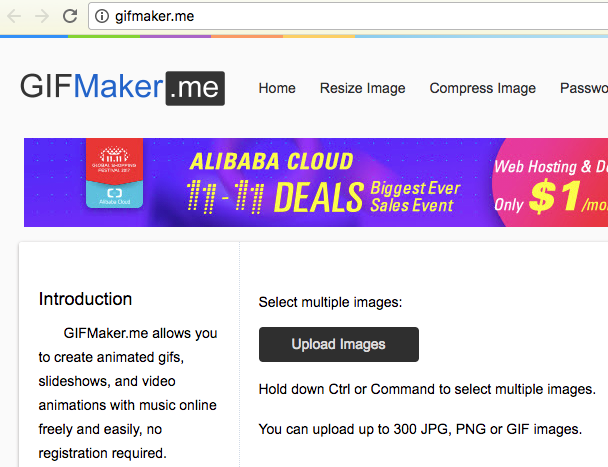
GIFMaker.me allows you to create animated gifs, slideshows, and video animations with music online freely and easily, no registration required.

1. Go to the web site

2. Upload Images

Find the upload images button (refer picture above)
Click the button.
Select your images.
Wait for the upload process to finish.

3. Preview the uploades images

4. Select Output Option

5. Get your output.

6. Sample

.

Tuesday, November 7, 2017

iPhone X vs Galaxy Note 8: Which is the best?


.
The iPhone X is finally out, which means Apple’s best iPhone ever will be put through various real-use tests, including speed test comparisons against the fastest Android handsets out there. But because the iPhone X packs exactly the same kind of internal hardware as the iPhone 8 Plus that was released in late September, you shouldn’t expect results to be much different.

We already saw a slew of iPhone 8 Plus vs. Galaxy Note 8 speed tests, and they all painted the same story. The A11 Bionic chip is miles ahead of the Qualcomm Snapdragon 835 processor, but the Galaxy Note 8’s extra RAM can come in handy.

YouTube channels EverythingApplePro and SuperSaf performed similar speed tests, looking at how fast the two phones load apps and how fast they load apps from memory, but also at browser speeds, boot speeds, and benchmark scores.
.
Read Further: http://bgr.com/2017/11/06/iphone-x-vs-galaxy-note-8-speed-test/

Monday, November 6, 2017

iPhone X stress test: Watch an iPhone X get hit with a hammer and stabbed with a knife


.

The video begins at the 1:24 mark when TechRax starts stabbing the iPhone X’s rear casing. I’m not exactly sure what this test is supposed to measure, but the iPhone X more or less emerged unscathed. The real fun, though, begins at the 2:30 mark when a 3-pound hammer is repeatedly dropped on the iPhone X from an unknown height. Shortly thereafter, our fearless tester begins actively pounding the iPhone X with a hammer before the front glass ultimately shatters.


The entire video can be viewed below.
.
SOURCE: http://bgr.com/2017/11/05/iphone-x-video-stress-test-hammer-knife/

Branding Checklist for Creative Entrepreneurs


.

1. Clear Mission:

Find your why. Do some business soul-searching and figure out what the core mission of your business is. Remember, each of us have unique strengths and gifts. Don’t try to do what everyone else is doing because your efforts to make your brand stand out won’t make a difference if they are not authentic. Do your research by learning the needs of your target audience and deliver services and content that will genuinely help them.

2. Target Niche:

Identify your strengths. What are you best at? Where are you going to shine the most? Pick your industry, narrow it down to one specific focus area and become the expert.

3. Target Audience:

A brand includes a clear understanding of who your target audience is and what they want and need from you. What entices them? Where are they primarily most active? What is their biggest problem that you can help them solve? When you can identify who your ideal target audience is and what their needs are, you can figure out the best way to connect with them.

4. Brand Values:

Determine how you will do business. Is it based on communication? Trust? Do you value customer loyalty? Always stay true to the values of your business, and be really clear on what you want your audience to know about you.

5. Brand Boundaries:

Create boundaries for your business and learn when to say no to something that doesn’t align with your brand values.

6. Brand Message:

Discover your brand message and ensure you are communicating it clearly to your audience across all platforms.

7. Custom Domain Name:

Choose a name for your business and secure that baby in a custom url ASAP. Stay away from services like WordPress.com or Wix that give domain names like www.yourname.wordpress.com or www.yourname.wix.com. Owning your own branded domain name will immediately establish credibility for your business.

8. Custom Email Address:

Get a personalized email address along with your domain name. This will also establish credibility.

9. Logo:

This one is a major asset as it serves as the face of your business and core of your brand identity. I recommend hiring a professional designer to create a logo for you. If you’re on a budget, there is always the option to DIY or purchase a pre-made logo. Either way make sure it’s high quality, concise and portrays the vision you have for your brand.

10. Website:

If you’re an online business owner, you NEED a beautiful and functional website. This will be the place for your visitors to go to learn more information about you, your mission and your services. It’s like your home sweet home on the Internet! Depending on your budget and experience, invest in a designer to create a completely custom website or purchase a theme and build it yourself.

11. Business Cards:

Do you plan on going to a social events surrounded by other business women who are looking to connect? Even if you aren’t planning on it, you never know who you might run into one day. Handing out your business card is like sharing a piece of you with the world. Make sure it’s something that stands out and has a clear call to action.

12. Social Media Presence:

A social media presence is going to be an essential tool for your brand strategy. Secure your social media handles at the time you secure your domain name. Find out where you target audience hangs out the most. The more active you are on that social media channel, the more likely you’re going to drive traffic to your business.

13. Creative Workspace:

Find or design a space that inspires you and your brand! Whether you have a desk in the corner of your closet, an office room or full-on building, make sure you are letting it be known that this is your space. This is where the creative magic happens, so you want to pour your heart and branding into it as much as possible.

14. Photography Style:

Establish an Instagram theme. If you are taking your own photos, make sure you use great lighting and stay consistent with the style, filters and props you use. You also have the option to invest in branded stock photos. Either way, high-quality images will take your brand to the next level.

15. Professional Headshots:

Use a professional, memorable photo as your profile image/avatar on all social media accounts. Include photos of yourself on your website as well to humanize your brand. You can stage these yourself or hire a photographer.

16. Font Palette:

Depending on the font you use, typography can set the tone for your brand. Are you playful or sophisticated? Bold or minimalistic? Choose two or three fonts and use them consistently throughout your website, social media graphics and other branding materials.

17. Brand Personality:

Ensure your personal branding is a reflection of you. Give your brand a positive character and make sure it shines throughout your business. It’s important for your audience to connect and relate to you.

18. Brand Colors:

It’s been said that color has a deep affect on how you make your audience feel. If you want your brand to reflect a specific style and make your audience feel a certain way, choose a color palette that plays to that emotion and supports the personality you want to portray. For example, neutral and monochromatic color palettes give off a minimalistic, classic vibe whereas vibrant hues are more bold and energetic.

19. Blog Post Graphic:

Create a template for your blog posts. Make sure they are set up using the proper dimensions for your website and social media platforms. If you are using the same template throughout, it will create consistency and make it easier for your brand to be identified as your brand.

20. Email List:

An email list is such an important part of your business. It’s how you directly communicate with your audience. Not many people think about creating a newsletter template that fits your brand instead of opting for a plain-text email. Embed your colors, fonts and images to jazz up those inboxes a little.

21. Community:

Engaging with your audience and building genuine relationships is so important for your brand. Take the time to respond to your comments on social media and blog posts. Join Facebook Groups and find threads where you can offer a helping hand or bits of advice. This is how you connect with your audience, build trust, learn more about their needs and hopefully land your dream clients.

22. Competitors:

Identify the competitors in your industry and differentiate yourself. Discover what makes your brand unique. Figure out what you can deliver that no one else can. Trust me, there is at least one thing.

23. Blog Strategy:

Determine how often you will publish new posts. Start off with once or twice a week and then gradually build up. This sets the pace for your brand letting your audience know when they can expect to see new content from you.

24. Content Strategy:

Determine your primary topics and categories for your blog, website and other content outlets. For your blog, you can choose one main topic and then break them into subtopics. Make sure you stay close to your niche, and don’t worry about running out of things to talk about. Trust me, there are so many ways to generate new blog post ideas.

25. Brand Language:

This is how you communicate. Whether it’s playful and energetic, or sweet and polite, make sure your brand communicates a clear message that your ideal audience can easily understand and relate to. And remember, don’t be afraid to be yourself! Each voice is unique and everyone has their own way of portraying their own message.

26. Brand Story:

Share your journey. Every business has a story about how they got started. It’s nice to connect your audience to the history of your business and show them how you got to where you are today.

27. Brand Balance:

Find a perfect balance of personal and professional posts on social media. Sometimes it’s nice to share the not-so-glamorous side of your business. Throw in some posts of your pups or kids every now and again if you feel like it. It’s a great way to interact with your audience on a deeper level.

28. Writing Style:

Discover a style of writing blog posts, emails and newsletters. Will it be informal or formal? Do you use lots of emojis, icons and color? Are you a storyteller? Do you include audio recordings, videos or lots of example photos? Developing your own writing style is a great way to establish your brand and attract people with similar styles.

29. Email Signature:

Brand your email by including an email signature that contains an image of yourself, your logo or your digital signature. You can also include a short bio, your contact information and a website URL.

30. Brand Buzz Words:

If you could sum up your brand using three key words, what would they be? Think about it. These three words quickly define your brand and are great to have on hand if you’re ever trying to decide if something is in line with your vision.
.
Extracted From: http://www.brandedbybritt.co/ultimate-branding-checklist/